
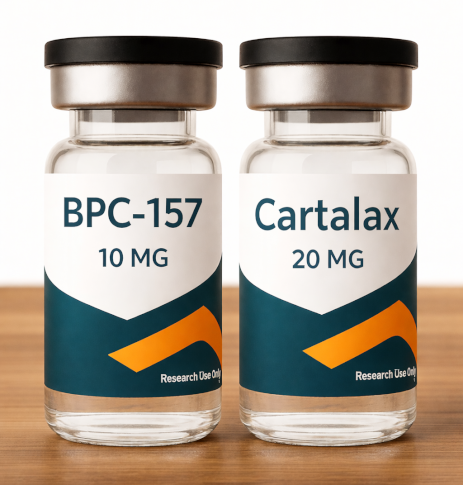
The quest for truly effective treatments for Osteoarthritis (OA) and chronic musculoskeletal injuries has intensified research into the therapeutic potential of peptides. Among the most widely discussed candidates are Cartalax, the bioregulatory tripeptide Ala-Glu-Asp, and BPC-157, the pentadecapeptide Body Protection Compound-157.
While both are categorized as regenerative peptides, their underlying molecular mechanisms, tissue specificity, and pharmacological goals are profoundly different—making the route of administration a deciding factor in real-world outcomes. Cartalax is an epigenetic modulator targeting the gene expression of the avascular chondrocyte, as detailed in what Cartalax peptide is and how it works.
On the other hand, BPC-157 is a systemic, cytoprotective factor. The latter powerfully promotes angiogenesis and soft tissue healing.
This exhaustive, multi-faceted analysis provides the definitive comparison between these two agents. It delves into the mechanistic divergence that dictates their suitability for either hyaline cartilage repair or broad ligament/tendon healing.
It explores the critical pharmacokinetic challenges related to their stability and delivery. It additionally summarizes the current preclinical safety data to establish a clear rationale for their separate, yet potentially synergistic, roles in orthopedic regeneration.
The Mechanistic Divide: Nucleus vs. Vasculature
The most fundamental difference between Cartalax and BPC-157 lies in their respective primary targets within the cellular and systemic environment.
Cartalax: Tissue-Specific Epigenetic Reprogramming
Cartalax is conceptualized as a highly focused, tissue-specific signaling molecule. It’s designed to execute an anabolic reset within the chondrocyte. This peptide is independent of external systemic factors like blood flow or global inflammation. It belongs to a family of peptides theorized to counteract age-related and disease-related gene dysregulation [3].
The Epigenetic Mechanism and Chromatin Structure
The core mechanism of Cartalax is believed to reside in epigenetic modulation. This is the precise control of gene expression without altering the DNA sequence itself. It’s achieved by influencing the chemical tags attached to the DNA or the histone proteins around which the DNA is wound, collectively forming chromatin [4].
Chondrocyte Phenotype Shift: The pathological progression of OA is fundamentally an epigenetic disease. This involves the chondrocyte switching from a stable, maintenance-focused phenotype to a destructive, hypertrophic phenotype [4].
This switch is driven by the misregulation of key epigenetic enzymes. This includes DNA Methyltransferases (DNMTs) and Histone Deacetylases (HDACs) [4].
Cartalax’s Proposed Action: Cartalax is theorized to act as a ligand or co-factor that biases the activity of these epigenetic enzymes [4]:
- Catabolic Gene Silencing: It aims to promote a heterochromatin (closed/inactive) state around the promoter region of catabolic genes like Matrix Metalloproteinase-13 (MMP-13). The specific repression of the NF-kappa B transcription factor, a major upstream activator of MMP-13, is a crucial component of this anti-catabolic signaling [4].
- Anabolic Gene Activation: Conversely, it aims to establish an euchromatin (open/active) state around the COL2A1 and Aggrecan genes. This ensures sustained transcription of the building blocks of the matrix [1].
- Goal: Molecular Memory: The advantage of an epigenetic mechanism is that it confers a form of molecular memory to the cell. Once the initial high-dose “reprogramming” is achieved, the chondrocyte may retain the new, stable gene expression pattern—making maintaining joint gains a central part of smart cycle design. Thus, it requires only a low-dose maintenance signal to sustain the effect [3].
The Avascular Design Constraint
Hyaline articular cartilage is unique in its lack of blood vessels, nerves, and lymphatic drainage. This classifies it as avascular. Cartalax’s mechanism is ideally suited for this environment because:
- Direct Cellular Action: The signal is delivered directly to the chondrocyte. This process is cell-autonomous. Therefore, it does not rely on systemic transport or vascular access [1].
- Avoiding Pathology: By avoiding any pro-angiogenic effect, Cartalax theoretically prevents the pathological invasion of blood vessels into the deep cartilage. This otherwise inevitably leads to endochondral ossification and the formation of inferior fibrocartilage scar tissue [1].
BPC-157: Systemic Cytoprotection and Pro-Angiogenesis
BPC-157 is a stable, 15-amino acid fragment of a human gastric protein [2]. Its mechanism is characterized by its pleiotropic, systemic nature. It focuses on rapid healing, cytoprotection, and vascular repair across multiple organ systems.
The Pro-Angiogenic Mechanism
BPC-157’s efficacy in soft tissue healing is inseparable from its role as a potent angiogenic factor [2].
- VEGFR2 Signaling Cascade: BPC-157 rapidly promotes the growth of new blood vessels. It achieves this by influencing the Vascular Endothelial Growth Factor Receptor 2 (VEGFR2) pathway [2]. It has been shown to upregulate VEGFR2 expression and accelerate the endothelial cells’ response to native VEGF. This leads to robust, rapid vessel formation [2].
- The NO System and Vascular Stability: Its powerful cytoprotective and anti-inflammatory effects are mediated by its deep influence on the Nitric Oxide (NO) system [2]. By regulating NO release and metabolism, BPC-157 helps stabilize the vasculature, prevent leakage, and optimize microcirculation. The latter is vital for delivering immune cells and nutrients to a wound site [2].
- FAK-Paxillin and Cell Migration: In hypovascular, fibrous tissues like tendons and ligaments, BPC-157 is a potent accelerator of cell mobility. It activates the Focal Adhesion Kinase (FAK)-paxillin signaling pathway. This is the fundamental mechanism cells use to attach to the extracellular matrix and migrate across a wound bed. This process is critical for filling soft tissue defects [4].
Systemic Scope and Cytoprotection
BPC-157’s broad activity, including accelerated healing of the GI tract, protection against neurotoxicity, and counteracting the damage caused by NSAIDs, marks it as a systemic stabilizer [1, 2]. This broad-spectrum function contrasts with the highly specific, single-tissue focus of Cartalax.
Efficacy and Structural Alignment with Tissue Type
The suitability of each peptide is entirely dependent on whether the target tissue is vascularized. It’s also dependent on what type of collagen matrix needs repair.
Cartalax: Specificity for Hyaline Articular Cartilage (Type II)
Hyaline articular cartilage is defined by its dense matrix of Type II Collagen and its unique avascular structure [1].
- Type II Collagen Upregulation: Cartalax’s explicit mechanistic goal, the upregulation of COL2A1, is the primary requirement for restoring the integrity of the articular surface [1]. This targeted approach bypasses the generalized growth signals of other agents.
- OA and Chondrocyte Senescence: Cartalax is conceptually aligned with treating OA, a condition characterized by chondrocyte senescence and pathological gene expression, particularly in knee degeneration research outlined in Cartalax for osteoarthritis and knee cartilage [4]. The epigenetic reset directly targets this failed cell state.
- End-Stage OA vs. Early Degeneration: While Cartalax is unlikely to reverse massive end-stage defects, its optimal use is theorized to be in early-to-moderate OA. This is where the focus is on halting the catabolic cascade and stimulating the remaining viable chondrocytes to restore the pericellular and interterritorial matrix [1].
BPC-157: Efficacy in Ligaments, Tendons, and Fibrocartilage (Type I)
BPC-157’s mechanism is optimally suited for repairing tissues that are typically poor healers due to low blood flow yet require blood flow and rapid fibroblast activity to heal.
- Ligament/Tendon Repair: Preclinical models have repeatedly demonstrated that BPC-157 accelerates the functional and structural recovery of torn tendons (e.g., Achilles, patellar) and ligaments (e.g., MCL) [4]. This is mediated by the rapid influx of blood and the accelerated migration and proliferation of fibroblasts [2, 4].
- Fibrocartilage and Meniscus: The meniscus and the labrum are partially vascularized structures rich in Type I Collagen. BPC-157’s pro-angiogenic and anti-inflammatory effects can significantly aid healing in the outer zones of the meniscus. This is where blood supply exists [3].
- Periarticular Protection: BPC-157’s anti-inflammatory systemic effects provide crucial periarticular protection. In turn, this reduces joint effusion, swelling, and pain caused by inflammation in the synovium and joint capsule. These effects are often observed in small-scale human reports for chronic knee pain [3].
Pharmacokinetic Challenges and Delivery Solutions
The clinical viability of both peptides is highly dependent on overcoming their inherent instability and rapid clearance rates.
Stability and Administration Routes
| Feature | Cartalax (Ala-Glu-Asp) – Tripeptide | BPC-157 (Pentadecapeptide) | Clinical Relevance |
|---|---|---|---|
| Oral Bioavailability | Extremely Low. Prone to rapid hydrolysis by GI peptidases | High/Excellent. Stabilized structure (acid resistance) allows effective oral administration for systemic effects [2] | BPC-157 offers non-invasive systemic dosing. Cartalax requires direct injection for localized effect. |
| Metabolic Clearance | Rapid; short half-life (minutes to hours) | Rapid; short half-life (minutes to hours). Metabolized primarily by the liver [1] | Both require advanced formulation to achieve sustained release kinetics. |
| Required Dosing | Localized, high-concentration load initially, followed by low-concentration maintenance (micro-dosing) [3] | Systemic (oral/SC) for broad effects; Local (IA) for targeted repair. Generally daily or every-other-day dosing without a carrier |
The Imperative of Advanced Delivery Systems
The short half-life of both peptides necessitates the use of advanced delivery vectors to translate preclinical efficacy into long-term clinical benefit, which is addressed in Cartalax loading phase and front-loading protocols. After the initial loading logic is established, the conversation naturally shifts toward maintenance dosing strategies designed for chronic joint degeneration.
Sustained-Release Hydrogels: The consensus in regenerative research is that both peptides must be formulated into injectable hydrogels. This includes those based on Hyaluronic Acid or biodegradable polymers like PLGA [5].
This approach allows for:
- Cartalax: A slow, continuous release over 6-12 months. This is essential to sustain the epigenetic gene-silencing effect. It also helps prevent the chondrocyte from reverting to the catabolic state [3].
- BPC-157: A sustained release that avoids the need for frequent (e.g., daily) subcutaneous injections. This optimizes patient compliance for chronic tendon issues [5].
- Targeted Nanoparticle Delivery: Future research may explore using nanoparticles to encapsulate Cartalax specifically engineered with surface moieties like small sugars or specific proteins. These can help enhance binding to the cartilage matrix and facilitate endocytosis by the chondrocyte. Ultimately, they can maximize the local concentration at the nucleus [5].
Safety, Regulatory Status, and The Angiogenic Risk
Despite their favorable preclinical profiles, both peptides face significant regulatory hurdles, which are explored further in the Cartalax vs alternatives and legality overview. Their unique mechanisms carry distinct safety concerns in the context of human disease.
Regulatory Status and Ethical Use
Neither Cartalax nor BPC-157 is an FDA-approved drug for any medical indication in the United States or the European Union [1, 5].
- Status as Research Chemicals: Both peptides are often sold as “Research Use Only” (RUO) chemicals. They bypass the stringent quality, purity, and efficacy standards required for human medicine [5].
- Compounding Restrictions: Regulatory crackdowns on compounding pharmacies have severely limited the ability of physicians to legally prescribe and dispense unapproved peptides. This underscores the critical need for formal NDA (New Drug Application) submission and approval [5].
The Safety Profile Divergence
Cartalax: Epigenetic Specificity and Unseen Risk
- Low Immunogenicity: As a very small tripeptide, Cartalax is anticipated to have an extremely low immunogenicity profile. This means they have a low risk of inducing neutralizing antibodies or allergic reaction) [5].
- The Gene-Switching Risk: The primary, unique safety concern for Cartalax is the long-term consequence of its proposed gene-level modulation. While intended to be tissue-specific, any agent that modifies chromatin structure requires extensive toxicological studies to confirm that it does not inadvertently influence oncogenes or tumor suppressor genes in other cells upon systemic absorption over decades of use [4].
BPC-157: Angiogenesis and Tumor Risk vs. Organ Protection
- Organ Protection: Preclinical data consistently shows BPC-157 to be organoprotective. It is generally non-toxic and helps tissues withstand stress [1].
- The Angiogenesis Paradox: BPC-157’s potent growth-promoting action is a double-edged sword. While it stimulates the rapid growth of blood vessels and cells for healing, this mechanism is generally avoided in cancer therapy [7]. It may, in theory, accelerate the growth of undetected malignancies [2].
- Resolution: Advanced research suggests BPC-157 is an angiomodulator. This means it only promotes beneficial, regulated wound healing while actively suppressing tumor growth and chronic inflammation-driven vessel overgrowth [2]. This key finding mitigates the theoretical tumor risk. However, it requires confirmation in large human trials.
The Future of Synergy and Research Focus (2026 Outlook)
The current research trajectory suggests that future orthopedic protocols will combine these two agents to leverage their distinct, complementary strengths.
Combined Regenerative Protocols
The most rational approach to chronic joint issues is a synergistic protocol. This involves degradation of both the avascular cartilage and the vascularized ligaments/menisci.
- Local Cartalax IA: Intra-articular injection of a Cartalax-loaded hydrogel to deliver the sustained, Type II Collagen-specific epigenetic signal directly to the chondrocytes.
- Local BPC-157 Periarticular SC: Subcutaneous or localized injection of BPC-157 around the joint to heal and stabilize ligaments and tendons (Type I Collagen), resolve surrounding inflammation, and optimize the subchondral bone health via improved microcirculation [6].
Research Focus on Endpoints
Future clinical trials for both compounds, once they achieve regulatory approval, will be sharply defined by their mechanistic targets:
- BPC-157 Clinical Trials: Should focus on improving Patient-Reported Outcomes (PROs). These should include the WOMAC (Western Ontario and McMaster Universities Arthritis Index) score and objective metrics of stability (e.g., knee stability tests). Ultrasound measurement of thickness and integrity to determine tissue structural improvement in tendons and ligaments is also important.
- Cartalax Clinical Trials: Must focus on Disease Modification (DMOAD) endpoints. This includes structural imaging (MRI T2 mapping or dGEMRIC to prove matrix quality and composition). It also includes biochemical markers to validate early molecular response and track when measurable changes typically appear.
Conclusion: Specificity in the Peptide Revolution
The comparison of Cartalax and BPC-157 provides a compelling illustration of the sophistication of modern peptide therapy. They are not interchangeable. Rather, they are specialized tools designed for different biological problems.
Cartalax (Ala-Glu-Asp) stands as the superior conceptual candidate for hyaline articular cartilage repair due to its unique, avascular-optimized mechanism: epigenetic repression of catabolism and activation of Type II Collagen synthesis.
BPC-157 is the preeminent candidate for soft tissue healing and systemic cytoprotection due to its powerful VEGFR2-mediated angiogenic and FAK-paxillin signaling. This promotes rapid healing in vascularized, Type I Collagen-rich tissues.
The future of orthopedic regeneration rests on the strategic use of highly specific peptides like Cartalax for the structural matrix. It is supported by broad healing agents like BPC-157 to stabilize the entire joint complex.
Citations
[1] Multifunctionality and Possible Medical Application of the BPC 157 Peptide—Literature and Patent Review – MDPI. URL: https://www.mdpi.com/1424-8247/18/2/185
[2] Therapeutic potential of pro-angiogenic BPC157 is associated with VEGFR2 activation and up-regulation – PubMed – NIH. URL: https://pubmed.ncbi.nlm.nih.gov/27847966/
[3] Intra-Articular Injection of BPC 157 for Multiple Types of Knee Pain – PubMed – NIH. URL: https://pubmed.ncbi.nlm.nih.gov/34324435/
[4] Epigenetic Regulation of Chondrocytes and Subchondral Bone in Osteoarthritis – MDPI. URL: https://www.mdpi.com/2075-1729/12/4/582
[5] Local and Systemic Peptide Therapies for Soft Tissue Regeneration: A Narrative Review – PMC – NIH. URL: https://pmc.ncbi.nlm.nih.gov/articles/PMC11426299/
[6] Pentadecapeptide BPC 157 (PL 14736) improves ligament healing in the rat – PubMed – NIH. URL: https://pubmed.ncbi.nlm.nih.gov/20225319/
[7] Regeneration or Risk? A Narrative Review of BPC-157 for Musculoskeletal Healing – PMC – NIH. URL: https://pmc.ncbi.nlm.nih.gov/articles/PMC12446177/