
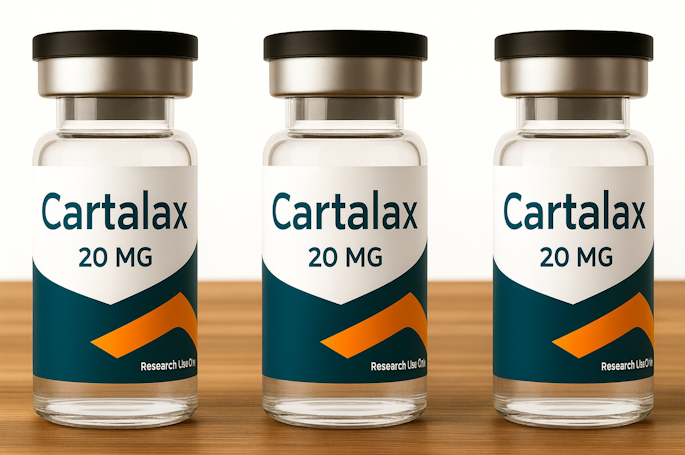
Cartalax peptide is quickly gaining attention in the peptide therapy community — especially for those looking to support cartilage health, joint mobility, and tissue recovery. But what exactly does it do, particularly in enhancing the body’s natural repair processes?
Let’s explore the most talked-about cartalax peptide benefits and what early research says.
Cartalax peptide is increasingly studied as a targeted compound for joint and cartilage support within cartalax peptide research.

Core Benefits of Cartalax Peptide
When we talk about cartalax peptide benefits, what we’re really looking at are practical outcomes that aim to improve joint health: smoother movement, less joint discomfort, better recovery from joint stress, and greater long-term joint resilience. Here’s how things break down in plain English. If you want a deeper breakdown of mechanisms, see what Cartalax peptide is and how it works.
#1. Cartilage regeneration and connective-tissue support
Cartalax may help the body’s natural repair systems work more efficiently — particularly in connective tissues. It seems to stimulate cell proliferation in certain cell types (which means more cells working to rebuild tissue) and may reduce programmed cell death in those tissues.
For cartilage, which naturally has limited regenerative capacity, this is especially relevant.
#2. Joint comfort, reduced inflammation and better mobility
Beyond simply rebuilding tissue, cartalax appears to help reduce inflammation and promote joint comfort. When joints are less inflamed, you feel less stiffness and pain — this in turn supports enhanced mobility and overall joint function.
One source describes cartalax peptide as “designed to support joint health, promote cartilage resilience, and improve mobility.”
Experience these potential benefits in your research, source reliable Cartalax below:

#3. Enhanced joint function and long-term joint health
By supporting cartilage health and connective tissue integrity, cartalax may contribute to long-term joint health. That means better joint function today and maintaining joint health for future wear and tear.
Because the joint tissues rely on healthy extracellular matrix and well-functioning cartilage cells, anything that helps those underlying systems may improve long term joint health and joint resilience.
#4. Recovery from joint injuries or strain
If you’ve experienced joint injuries or physical activity that stresses your joints, which can be common in an active lifestyle, (think knees, hips, shoulders), cartalax might support the recovery process. By boosting connective tissue repair, reducing inflammation, and supporting cartilage cells, it can be an option for those who want to bounce back quicker with less long-term joint degeneration. For targeted recovery protocols, explore Cartalax Peptide For Joint Recovery: Guide To Cartilage Repair, Arthritis & Injury Support. For research guidance on timing and structure, review Cartalax peptide dosage recommendations.
#5. Cartilage and Joint Health Support
Let’s dig into how cartalax may support cartilage health and joint health more specifically — in everyday terms.
Why cartilage matters
Cartilage is the slippery tissue that cushions your joints and allows smooth movement. With time or heavy use, cartilage can wear down, which can contribute to joint pain, reduced mobility, and joint deterioration. Maintaining cartilage health helps maintain joint function, joint lubrication (the smooth gliding of joints), and helps prevent joint degeneration.
How Cartalax Works To Repair Cartilage
Cartalax peptide appears to interact with cells involved in connective tissue (like fibroblasts) and may influence gene expression related to tissue maintenance and regeneration. For example: In fibroblasts, cartalax was shown to increase markers of proliferation and reduce markers tied to aging cells and cell death.
Because fibroblasts help maintain connective tissues, including cartilage, this suggests a pathway for supporting cartilage repair and staying resilient in joints. In addition, while direct human clinical studies for cartilage cells and cartalax are limited, the broader peptide-engineering field, including various research chemicals, shows peptides can be useful in cartilage repair and regeneration.
For sourcing high-quality samples for research, check Cartalax for Sale: Reputable Places To Buy This Peptide.
Ready to test these mechanisms?
Practical impact for you
What this looks like in real life: less stiffness when climbing stairs, more fluid movement when getting up from a chair, reduced joint pain after physical activity, and the feeling of greater joint resilience. If you’re someone who deals with joint pain or wants to stay active and avoid joint deterioration as you age, supporting cartilage health becomes important — and cartalax could be one tool in that toolbox.
Potential Benefits Beyond Joints
While cartalax is best known for cartilage support and joint health, some research hints at wider regenerative properties — though more studies are needed.
- Skin fibroblast functions and connective tissue: Cartalax has been shown in some experimental settings to influence skin fibroblasts (the cells that generate the structural tissue of skin) by increasing proliferation and reducing apoptosis (cell death). Proper preparation is key for lab studies; see Cartalax Peptide Reconstitution Guide: Step-by-Step For Lab Use. So, beyond joints you may see benefits in connective tissues overall.
- Cellular aging / rejuvenation: Some studies suggest cartalax peptide might modulate markers of cellular aging — for instance reducing expression of p16, p21 (age-associated cell cycle inhibitors) and increasing SIRT-6 (a protein linked to longevity). While this doesn’t mean a miracle youth pill, it does suggest that cartalax might support cellular health in various tissues. Maintaining potency requires correct handling; learn about Cartalax Storage & Shelf Life: Keeping Your Peptides Potent In 2026.
- Muscle recovery or tissue repair: Because connective tissue spans not just joints but ligaments, tendons, skin, and more, there’s potential for broader support for recovery from strain or injury in connective tissues. Research in peptides for cartilage repair and tissue engineering supports these broader regeneration ideas. Avoid common errors in application; review Beginner Mistakes With Cartalax: Common Pitfalls In Research Protocols.
Remember: these wider applications are still emerging. The strongest case among them remains the joint-cartilage axis.
How It Compares to Other Peptides
If you’ve heard of peptides like BPC‑157 or TB‑500 (both popular in the regenerative-medicine/athletic-recovery world), you might wonder how cartalax stacks up. Here’s a friendly comparison.
- Focus area: BPC-157 and TB-500 are broadly used for tissue repair, tendons, ligaments, muscle injuries and systemic recovery. Cartalax appears more specialized in cartilage and joint-focused repair — targeting connective tissue in joints, cartilage cells, and structural integrity of joint tissues.
- Mechanism (in short): While all three support repair, cartalax is described as a bioregulator acting on fibroblasts and connective-tissue cells, potentially modulating gene expression, cell proliferation, and reducing apoptosis. BPC-157 and TB-500 also do this, but with broader systemic tissue-repair applications rather than a cartilage-specific focus.
- Research maturity: BPC-157 and TB-500 have more anecdotal and practitioner-use data (though also limited in human rigorous trials). Cartalax is newer in this space, and while promising, still has less clinical human data, especially focused on cartilage repair in joints. For why specificity counts, compare in Cartalax vs Generic Peptides: Why Tissue-Specific Matters.
- Targeted outcome: If your goal is muscle-oriented recovery or tendon damage, BPC-157/TB-500 might appear first. If your goal is joint mobility, long-term joint health, cartilage resilience, and reducing joint discomfort from joint wear or cartilage degeneration, cartalax might offer a more tailored approach.
In short: cartalax doesn’t replace those other peptides, but it fills a niche — one focused on cartilage, joint lubrication, joint resilience, and connective-tissue integrity inside joints. For a direct head-to-head, read Cartalax vs BPC-157 for cartilage repair comparisons. As always, use with professional oversight and know the research is still evolving.
Frequently Asked Questions
Can peptides regrow cartilage?
Regrowing cartilage fully is a big challenge because cartilage naturally has limited blood supply and cell turnover. Some peptides in lab settings support cartilage repair, regeneration, or improved function of cartilage cells (e.g., through scaffolds or cell differentiation) in preclinical research. So peptides may support cartilage repair — but “regrow” in the sense of brand-new cartilage identical to youthful cartilage is still a high bar.
Does Cartalax work?
Early studies suggest cartalax may encourage the renewal of joint tissue by supporting fibroblast-activity, reducing markers of aging cells, and promoting structural support in connective tissues. However, large-scale human clinical trials specifically showing cartilage repair in joint patients are still scarce — so it’s promising but not guaranteed.
What is the best peptide for skin tightening?
For skin tightening, peptides that support skin fibroblasts, collagen synthesis, and extracellular matrix remodeling are commonly discussed (e.g., GHK-Cu). Cartalax has some research in skin fibroblasts and connective-tissue support, so it could be one option. But if your primary goal is skin, looking at peptides targeted to skin (versus joint/cartilage) may give more options.
What are the negative side effects of peptides?
Since many peptides (including cartalax) are in early research or niche use, documented side-effect data is limited. Some reports mention mild gastrointestinal upset, fatigue or injection-site reactions. More broadly, peptides may carry risk of off-target effects, immune response, or unknown long-term effects. Always consult a medical professional before using. For a Cartalax-specific safety overview, see Cartalax side effects and potential complications.
For in-depth mechanisms, return to the cluster guide: What Is Cartalax Peptide? Mechanisms & Research Breakdown.
Conclusion
To sum it up: cartalax peptide appears promising for joint and cartilage health. It may support cartilage repair, enhance joint comfort and mobility, reduce inflammation, and offer a long-term approach to joint health by strengthening connective tissue and promoting healthy cartilage cells.
While the research is still growing, especially in humans, the evidence points toward meaningful cartalax peptide benefits, especially for those looking to maintain joint resilience, recover from joint injuries, or support long-term joint wellness.
As studies continue, cartalax may become one of the most exciting peptides in the regenerative space, offering a potential boost for mobility, recovery, and enhancing cellular processes for long-term joint support.
Get started: