

Michael Roberts
Independent Science Writer & Peptide Research Analyst
Michael Roberts is an independent science writer and research analyst with a focus on peptide research, aging-related compounds, and experimental therapeutics. His work centers on reviewing, synthesizing, and summarizing findings from peer-reviewed scientific literature, preclinical studies, and publicly available research sources.
Michael’s research interests include bioactive peptides, molecular mechanisms related to aging and neurodegeneration, and the evolving landscape of experimental research compounds. He specializes in translating complex scientific material into clear, accessible educational content for researchers and readers seeking a deeper understanding of emerging compounds.
All content authored by Michael is intended for informational and research reference purposes only. He does not provide medical advice, clinical recommendations, or treatment guidance. Readers are encouraged to consult qualified healthcare professionals regarding any medical or health-related decisions.
Editorial Approach
Content published on CartalaxPeptide.com follows a research-first editorial approach, emphasizing:
- Peer-reviewed sources and academic literature
- Clear distinction between established findings and experimental research
- Conservative language reflecting current scientific uncertainty
- Transparency regarding limitations of existing studies
Areas of Focus
- Peptide research and molecular biology
- Experimental and preclinical studies
- Aging-related and neurological research compounds
- Scientific literature analysis and synthesis
-
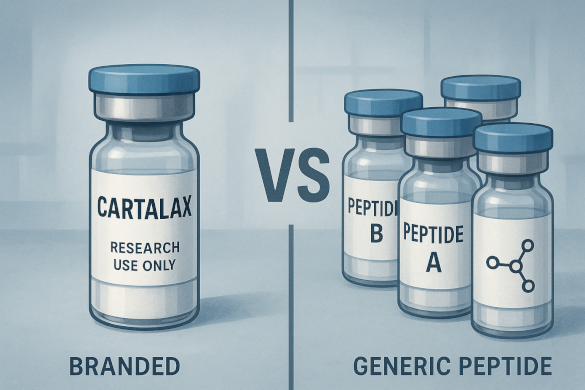
The burgeoning field of peptide therapeutics is defined by a dichotomy. This is the use of generic, broad-spectrum peptides designed for systemic functions, versus highly specialized, tissue-specific bioregulators like Cartalax (Ala-Glu-Asp) [1, 2]. While generic peptides may offer wide-ranging healing properties, the growing body of research supports the assertion that for complex, localized conditions such…
-
The status of Cartalax (the bioregulatory tripeptide Ala-Glu-Asp) is one of the most critical and misunderstood aspects of its therapeutic profile—start with the Cartalax Peptide homepage for the full content hub. The definitive answer is that Cartalax is not a legal medicine authorized for prescription, sale, or use in humans for any medical condition in…
-
The use of investigational peptides, such as the ultrashort bioregulator Cartalax (Ala-Glu-Asp), in preclinical research demands a level of procedural rigor often underestimated by new researchers [1, 2]. These challenges are characteristic of cartalax peptide research in laboratory settings. Cartalax is typically studied for its influence on chondrocyte gene expression. A detailed explanation of these…
-
Chronic low back pain (LBP) is a pervasive global health issue. It is frequently linked to the progressive breakdown of the intervertebral disc (IVD), a condition known as Disc Degeneration (DD) [3]. The IVD is a complex fibrocartilaginous structure responsible for flexibility and shock absorption in the spine. It comprises the nucleus pulposus (NP), a…
-
The therapeutic ambition of utilizing Cartalax, which is the bioregulatory tripeptide Ala-Glu-Asp, in the long-term management of Osteoarthritis (OA) is not merely to treat symptoms. It can fundamentally alter the disease trajectory. Cartalax is classified as an epigenetic modulator. This is a signal designed to chemically “re-program” the diseased chondrocyte. It achieves this by switching…
-
The peptide known as Cartalax peptide is gaining attention for its potential to support cartilage health and cartilage-repair efforts. But before diving in, it’s wise to understand its safety profile, especially regarding potential joint comfort. Here’s what current reports and research suggest about possible cartalax side effects and what users should know. This safety discussion…
-
The use of peptides like Cartalax (Ala-Glu-Asp), an ultrashort peptide bioregulator, in laboratory research requires meticulous handling. This is particularly true during the reconstitution process. Cartalax, typically supplied in a freeze-dried powder form, must be accurately dissolved in a suitable solvent under aseptic conditions. These handling requirements are specific to cartalax peptide and other ultrashort…
-
Cartalax is a synthetic peptide bioregulator. It has garnered significant attention in the fields of aging research, joint health, and regenerative medicine, primarily originating from Russian scientific institutions. It is classified as an ultrashort, tissue-targeted peptide. It specifically regulates cellular functions within cartilage and other connective tissues. This activity places cartalax peptide at the center…
-
Cartalax peptide has gained attention for its potential role in supporting cartilage health and joint health, but how much is typically used in research? Here’s a practical look at Cartalax peptide dosage, how it’s measured, and what factors can influence results. This overview fits within the broader research landscape surrounding cartalax peptide and its role…
-

Cartalax peptide is quickly gaining attention in the peptide therapy community — especially for those looking to support cartilage health, joint mobility, and tissue recovery. But what exactly does it do, particularly in enhancing the body’s natural repair processes? Let’s explore the most talked-about cartalax peptide benefits and what early research says. Cartalax peptide is…