

Michael Roberts
Independent Science Writer & Peptide Research Analyst
Michael Roberts is an independent science writer and research analyst with a focus on peptide research, aging-related compounds, and experimental therapeutics. His work centers on reviewing, synthesizing, and summarizing findings from peer-reviewed scientific literature, preclinical studies, and publicly available research sources.
Michael’s research interests include bioactive peptides, molecular mechanisms related to aging and neurodegeneration, and the evolving landscape of experimental research compounds. He specializes in translating complex scientific material into clear, accessible educational content for researchers and readers seeking a deeper understanding of emerging compounds.
All content authored by Michael is intended for informational and research reference purposes only. He does not provide medical advice, clinical recommendations, or treatment guidance. Readers are encouraged to consult qualified healthcare professionals regarding any medical or health-related decisions.
Editorial Approach
Content published on CartalaxPeptide.com follows a research-first editorial approach, emphasizing:
- Peer-reviewed sources and academic literature
- Clear distinction between established findings and experimental research
- Conservative language reflecting current scientific uncertainty
- Transparency regarding limitations of existing studies
Areas of Focus
- Peptide research and molecular biology
- Experimental and preclinical studies
- Aging-related and neurological research compounds
- Scientific literature analysis and synthesis
-
The therapeutic efficacy of Cartalax, the bioregulatory tripeptide Ala-Glu-Asp (AED), hinges not only on its molecular mechanism, epigenetic modulation of chondrocytes. It also hinges fundamentally on its pharmacokinetics. This refers to how it is delivered, distributed, and cleared from the body, which depends on what Cartalax peptide is at the molecular level. For therapies targeting…
-
Cartalax (Ala-Glu-Asp) is an unapproved peptide. For a complete structural, regulatory, and research overview of Cartalax, see the main Cartalax peptide resource at CartalaxPeptide.com. Currently, it is categorized strictly as a Research Use Only (RUO) chemical. This classification has significant legal implications, which are explored in detail in our breakdown of Cartalax’s legal status in…
-
The landscape of Osteoarthritis (OA) management is bifurcated into two fundamentally different therapeutic philosophies: Providing the raw molecular building blocks necessary for cartilage maintenance, the role of supplements like Glucosamine (GL) and Chondroitin (CS) Delivering high-level genetic instructions to correct cellular dysfunction, the mechanism of peptides like Cartalax (Ala-Glu-Asp). This is the essential conflict between…
-
If you’ve been searching for Cartalax for sale, you’re probably curious about why this unique peptide complex has become such a popular topic among researchers studying connective tissues, joint health, and aging processes. Cartalax 20mg is part of a class of short peptides known as peptide bioregulators, originally studied by Professor Vladimir Khavinson and his…
-
The trajectory of orthopedic regenerative medicine is rapidly changing. It shifts from broad, tissue-scaffolding strategies to highly targeted, molecular-level interventions. Cartalax, the synthetic tripeptide Ala-Glu-Asp (AED), represents a leading example of this shift within the bioregulatory peptide class. Hypothesized to function as a cytomedin, Cartalax acts by modulating gene expression within cartilage cells. It encourages…
-
The clinical landscape of Osteoarthritis exhibits a profound sex disparity. It’s particularly common following menopause. While men and women have similar incidence rates before the age of 50, the prevalence and severity of OA in women dramatically increase post-menopause. This directly implicates the role of sex hormones, primarily estrogen and progesterone, in joint homeostasis and…
-
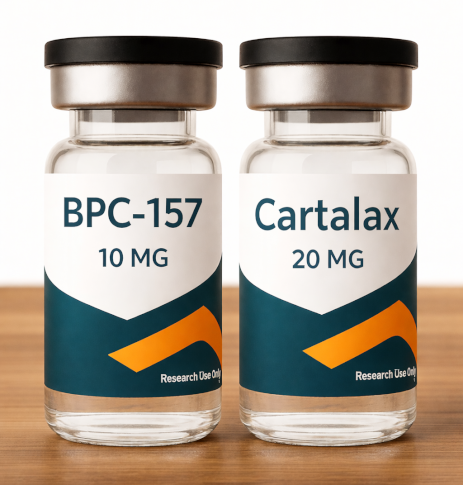
The quest for truly effective treatments for Osteoarthritis (OA) and chronic musculoskeletal injuries has intensified research into the therapeutic potential of peptides. Among the most widely discussed candidates are Cartalax, the bioregulatory tripeptide Ala-Glu-Asp, and BPC-157, the pentadecapeptide Body Protection Compound-157. While both are categorized as regenerative peptides, their underlying molecular mechanisms, tissue specificity, and…
-
The shoulder joint or “glenohumeral joint” is a biological masterpiece. Compared to any other joint in the human body, it offers the greatest range of motion. This exceptional mobility, however, comes at the cost of inherent structural instability. In turn, the shoulder complex is highly susceptible to injury and degenerative conditions. The standard treatment paradigm…
-

The pervasive challenge of Osteoarthritis (OA), particularly affecting the knee cartilage, represents a leading cause of disability globally [3]. As a chronic, degenerative joint disease, OA involves the breakdown of articular cartilage. This is the smooth, non-innervated, and avascular tissue that lines the ends of bones [4]. Because this tissue lacks a direct blood supply,…
-

The marketing surrounding Cartalax (Ala-Glu-Asp) has created a significant gap between scientific speculation and verified fact. For a neutral, evidence-based overview separating speculation from verified data, readers should begin with the foundational research hub at Cartalax Peptide. As an unapproved, synthetic peptide, Cartalax is strictly classified as a Research Use Only (RUO) chemical, a status…