
Cartalax is a synthetic peptide bioregulator. It has garnered significant attention in the fields of aging research, joint health, and regenerative medicine, primarily originating from Russian scientific institutions. It is classified as an ultrashort, tissue-targeted peptide. It specifically regulates cellular functions within cartilage and other connective tissues. This activity places cartalax peptide at the center of current cartilage-focused peptide research.
The peptide is recognized for its remarkably compact size and specific amino acid sequence. It’s hypothesized to grant it the ability to modulate gene expression within its target cells. This proposed mechanism distinguishes it from traditional symptomatic treatments for joint conditions, focusing instead on supporting the cells responsible for maintaining the structural integrity of cartilage. These cellular effects translate into the real-world outcomes discussed in Cartalax peptide benefits.
At this time, Cartalax is not a widely approved pharmaceutical drug. Because of this investigational status, Cartalax peptide dosage discussions remain grounded in preclinical and laboratory research models. Rather, its study currently resides almost entirely within preclinical and cellular research models. This limited clinical exposure is also why reported Cartalax side effects data remain sparse. This positions it as a fundamental investigational tool in understanding tissue maintenance and degeneration.
The research surrounding Cartalax and related peptide bioregulators suggests a paradigm shift toward addressing age-related and degenerative conditions at the cellular and epigenetic level. The subsequent analysis will detail its molecular structure, hypothesized mechanisms, rigorous research context, and limitations within the global regulatory framework.
Historical and Foundational Context: The Peptide Bioregulator Theory
To fully understand Cartalax, one must first appreciate the scientific tradition from which it emerged: the theory of Peptide Bioregulation. It’s primarily championed by Russian scientist Dr. Vladimir Khavinson.
The Origin of Cytomedins
Cartalax is categorized as a cytomedin, a term used to describe synthetic peptides derived from sequences originally found in extracts of specific animal organs or tissues.
- Extraction and Isolation: The initial research involved isolating protein fractions from animal organs (e.g., the pineal gland, thymus, liver, cartilage, etc.). Through fractionation and sequencing, ultrashort peptide sequences (typically di-, tri-, or tetra-peptides) were identified as the core bioactive elements capable of exhibiting tissue-specific effects [4, 6].
- The Theory of Tissue Specificity: The central hypothesis is that these short peptides act as endogenous signaling molecules. They are responsible for maintaining tissue-specific gene expression and function [4]. As the body ages or experiences pathology, the supply or signaling efficacy of these regulatory peptides declines. This eventually leads to organ or tissue failure. The synthetic administration of a cytomedin like Cartalax is theorized to restore the correct regulatory signals to the aged or damaged cells [4].
For a detailed comparison between substrate-based supplementation and epigenetic peptide signaling, see our analysis of Cartalax vs glucosamine and chondroitin.
Cartalax’s Place in the Family
Cartalax, with its specific target of cartilage and its tripeptide structure (Ala-Glu-Asp), is a classic example of this theory applied to musculoskeletal health. Its purpose is to influence the chondrocyte population. This is uniquely critical because cartilage tissue has virtually no regenerative capacity without external intervention [1, 4]. Therefore, supporting the existing chondrocytes to maintain their specialized, non-senescent phenotype is the ultimate therapeutic goal [1].
The Molecular Architecture and Chemical Identity of Cartalax
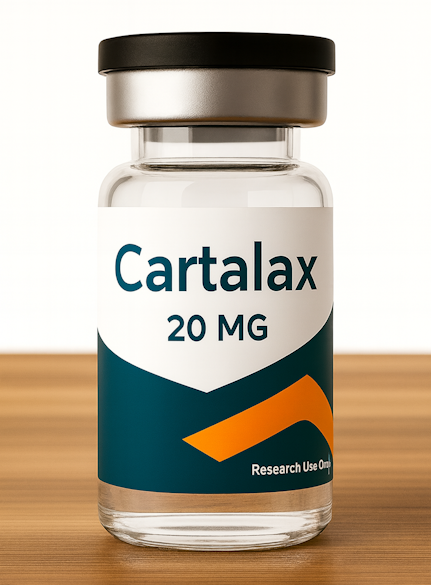
The remarkable functionality proposed for Cartalax stems directly from its minute and highly specific structure.
Structural Characteristics: The Ala-Glu-Asp Tripeptide
Cartalax is fundamentally defined by its tripeptide sequence: Ala-Glu-Asp (Alanine – Glutamic Acid – Aspartic Acid).
- Ultrashort Size and Weight: This structure results in a very low molecular weight, approximately 333 daltons [4]. This size is a critical determinant of its mechanism. To understand its advantages over non-targeted options, read Cartalax vs Generic Peptides: Why Tissue-Specific Matters. Conventional large-molecule drugs (antibodies, therapeutic proteins) must bind to external cell receptors. However, the ultrashort size of Cartalax is hypothesized to confer the ability for intracellular access [4].
- Charge and Composition: The presence of two acidic residues (Glutamic Acid and Aspartic Acid) means the peptide carries a slight negative charge at physiological pH. Despite this charge, which typically hinders membrane passage, its size is believed to allow it to be efficiently transported into the cell cytoplasm and even the nucleus. This is possibly done via mechanisms involving proton-dependent oligopeptide cotransporters (POT) [4].
- Nuclear Access: The theory of peptide bioregulation relies on the peptide reaching the cell’s regulatory machinery. The proposed nuclear access of Cartalax is what sets it apart from surface-acting growth factors. This distinction becomes clearer when examining Cartalax vs BPC-157 and other regenerative peptides. This enables it to influence gene transcription directly [2].
Molecular Mimicry and Connective Tissue Relevance
The peptide sequence of Cartalax has been studied for its relationship to the natural components of the extracellular matrix (ECM).
- Relationship to Collagen: The tripeptide sequence is structurally related to certain regulatory regions within the large, complex collagen molecules that constitute the bulk of cartilage tissue [4]. For instance, components of Type II and Type XI collagen fibrils, essential for the structural integrity and organization of the cartilage matrix, contain similar motifs [4].
- Signaling for Assembly: Scientists hypothesize that by resembling natural peptide fragments released during the normal, healthy turnover of cartilage, Cartalax might mimic endogenous regulatory signals [1]. This molecular mimicry could potentially influence signaling pathways related to proper collagen fibril formation. This is crucial for maintaining the tissue’s ability to bear compressive load [6].
Hypothesized Mechanisms of Action: Epigenetic and Cellular Regulation
The proposed mechanism of Cartalax is highly sophisticated, centering on correcting the epigenetic drift and cellular senescence that characterizes degenerative joint disease. Its action is fundamentally epigenetic and gene-regulatory [1, 2].
-
Direct Transcriptional Regulation and Chromatin Interaction
The central theory involves direct influence over gene transcription once the peptide reaches the nucleus [1, 2].
- Targeting Chromatin: Researchers hypothesize that Cartalax may interact with nuclear components such as histones or other chromatin remodeling complexes [2, 3]. By altering the packaging of DNA, the peptide could potentially make specific gene promoter regions more accessible to transcription factors [3]. This interaction would effectively “turn on” genes that have been silenced due to aging or disease. This concept is known as epigenetic modulation [3].
- Influence on Chondrocyte Identity (SOX9/RUNX2): The most critical application of this is the modulation of master transcription factors that maintain chondrocyte identity. Cartalax is studied for its ability to support the expression of SOX9. This is the primary transcription factor required for the synthesis of Collagen Type II and Aggrecan [3]. Conversely, it may help suppress the transcription factor RUNX2, which drives the pathological differentiation of chondrocytes into bone-forming cells. This process is called endochondral ossification, a characteristic of advanced Osteoarthritis [3]. The peptide’s action is theorized to stabilize the healthy chondrocyte phenotype.
-
Restoration of Extracellular Matrix (ECM) Homeostasis
Cartilage degeneration is characterized by an imbalance where catabolism significantly overwhelms anabolism (synthesis). Cartalax is studied for its potential to restore this essential homeostasis.
- Upregulation of Anabolic Genes: Preclinical research suggests Cartalax may support the expression of cartilage-specific ECM genes. This is especially true when it comes to those that synthesize key structural components like Collagen Type II alpha 1 chain and Aggrecan [2]. This targeted upregulation directly counteracts the loss of matrix material.
- Downregulation of Catabolic Genes (MMP Inhibition): Cartalax is hypothesized to inhibit the transcription of certain Matrix Metalloproteinases (MMPs). These are major enzymes that degrade collagen and proteoglycans, which are overexpressed in inflammatory joint diseases [2, 5]. Specifically, studies investigate its ability to suppress major collagenases like MMP-1 and MMP-13, thereby reducing the rate of irreversible structural destruction in the cartilage [2, 5].
-
Counteracting Cellular Senescence and Apoptosis
Chronic joint damage is intrinsically linked to the accumulation of senescent chondrocytes. These are cells that have ceased dividing and secrete a destructive mix of pro-inflammatory cytokines and MMPs known as the Senescence-Associated Secretory Phenotype (SASP) [1, 5].
- Modulation of Senescence Inhibitors: Studies using cell cultures suggest that Cartalax may reduce the expression of key cellular senescence markers. These include the cell cycle inhibitors p16 and p21, and the tumor suppressor protein p53 [1]. By downregulating these inhibitory proteins, the peptide is theorized to allow the chondrocytes to revert to a more functional, non-senescent state [1].
- Enhancing Cellular Resilience: Chondrocytes are highly susceptible to damage from oxidative stress. This is due to their low metabolic rate and avascular nature [1]. Cartalax is hypothesized to support cellular resilience against this stress by stabilizing mitochondrial function and regulating stress-related pathways [1]. By mitigating chronic stress, the peptide may inhibit the activation of apoptosis-associated caspases. Thus, it helps reduce programmed cell death and preserves the functional chondrocyte population [1].
Research Status and Context within Regenerative Medicine
The rigorous investigation of Cartalax is situated within the highly challenging, high-stakes field of cartilage regeneration. Its cartilage-focused research direction is explored further in Cartalax peptide for joint recovery.
Evidence from Preclinical and In Vivo Studies
The data supporting Cartalax’s hypothesized mechanisms come from sophisticated preclinical research. This reached is controlled in vitro (cell culture) assays and in vivo (animal models).
Animal Models of Joint Damage
In animal models designed to simulate accelerated aging, surgically induced joint instability, or inflammatory arthritis, the administration of peptides like Cartalax has been linked to observations of improved cartilage integrity. These studies often measure biochemical markers and histological scores. This suggests a slowing down of experimental cartilage deterioration compared to untreated controls [1].
Experimental Methods:
Studies of Cartalax utilize advanced methodologies to validate its effects:
- Immunohistochemistry: Used to physically locate and quantify the expression of key proteins (e.g., Collagen Type II, MMP-13) within tissue sections after peptide administration [4]
- Quantitative Polymerase Chain Reaction (qPCR): Used in cell culture assays to measure the absolute increase or decrease in the messenger RNA (mRNA) transcripts for target genes like SOX9 or RUNX2. This provides direct evidence of transcriptional modulation [3].
- Histological Grading Systems (e.g., OARSI scores): Used to provide standardized, quantifiable assessment of the structural health, or damage level, of cartilage tissue in animal models [1].
Clinical Trial Landscape and Limitations
Despite the intriguing preclinical findings, the clinical and regulatory status of Cartalax remains strictly investigational [2].
- Lack of Registered Human Trials: Cartalax does not have widespread human clinical trials registered on major platforms like ClinicalTrials.gov. It’s also not an approved drug in major regulatory jurisdictions (like the FDA or EMA) [2].
- The Translation Barrier: The primary difficulty in translating these findings lies in the anatomical challenge of cartilage itself. It is avascular and aneural. This means delivering a therapeutic agent systemically and having it accumulate in high enough concentration in the joint space to exert a localized effect is extremely difficult [1, 4].
Advanced Translational Research Tools
To bridge the gap between animal research and human trials, researchers are increasingly leveraging advanced technology [5, 6].
- Microphysiological Systems (MPS) / Organ-on-a-Chip: These systems create complex in vitro joint models incorporating multiple cell types (chondrocytes, synovial cells) and capable of applying mechanical load [5]. These models allow researchers to test Cartalax’s ability to maintain matrix integrity and suppress inflammatory cytokines under dynamic, stressful conditions that closely mimic the human joint environment. This provides a necessary validation step before moving to large human cohorts [5].
- Hydrogel Delivery Systems: Research is ongoing to develop specialized, injectable biomaterials (like adhesive orthopedic hydrogels) that could serve as a localized delivery system for peptides like Cartalax directly into the joint space or cartilage defect [6]. This would bypass the systemic circulation challenges and deliver the required concentration of the peptide directly to the chondrocytes [6].
Future Outlook and Ethical Considerations
The research into Cartalax is a microcosm of the larger effort to utilize short peptides for age-related and degenerative conditions.
The Future of Epigenetic Regulation in Medicine
The research into Cartalax is a direct exploration of the therapeutic potential of epigenetic modulation [3].
- Addressing the Root Cause: This paradigm posits that chronic, age-related diseases like Osteoarthritis are, in large part, a result of the epigenetic clock running down. In turn, they silence necessary maintenance genes (like SOX9) and activate destructive genes (like RUNX2) [3]. If ultrashort peptides like Cartalax can successfully act as epigenetic modulators, they could theoretically restore the youthful transcriptional activity of chondrocytes. As a result, they can offer a fundamental, disease-modifying treatment rather than just symptomatic relief [3].
- Systems Biology Validation: Future high-level validation will involve transcriptomic and epigenomic analysis, such as RNA sequencing and histone modification mapping). This can confirm precisely which genetic networks are modulated by Cartalax, defining its true mechanism of action [2].
Ethical and Regulatory Outlook
While the research is promising, the ethical and regulatory pathway for Cartalax is long and demanding.
- Safety Profile: Because peptides like Cartalax are theorized to interact with gene transcription, their long-term safety profile regarding off-target effects, cellular stability, and potential cancer risk must be rigorously established through comprehensive Phase 3 trials before human approval [1, 2].
- Scientific Consensus: The broader scientific community maintains that while the concept of peptide bioregulation is compelling, much more independent, high-quality clinical trial research is necessary to move these compounds from the laboratory bench to the patient bedside.
Practical Considerations for Cartalax in Laboratory Research
While Cartalax’s mechanisms focus on epigenetic and cellular regulation, effective lab use requires attention to handling protocols to maintain peptide integrity. Key practical aspects include proper reconstitution, storage to preserve potency, avoiding common errors in protocols, and sourcing from reliable vendors.
For step-by-step lab preparation: Cartalax Peptide Reconstitution Guide: Step-by-Step For Lab Use.
Optimal storage conditions and longevity: Cartalax Storage & Shelf Life: Keeping Your Peptides Potent In 2026.
Pitfalls to avoid in initial studies: Beginner Mistakes With Cartalax: Common Pitfalls In Research Protocols.
Trusted purchasing options: Cartalax for Sale: Reputable Places To Buy This Peptide.These guidelines ensure reliable results in preclinical models exploring cartilage health and gene expression.
Conclusion
In summary, Cartalax peptide is an exciting, ultrashort tripeptide under intense investigation for its potential as a gene-regulatory agent to support cartilage health. The robust preclinical data suggest a potent role in maintaining extracellular matrix integrity, balancing anabolic and catabolic genes, influencing key transcription factors like SOX9, and mitigating cellular senescence. However, it remains firmly in the basic research phase. It still awaits the definitive, large-scale clinical trial data necessary for its validation and potential future use as a human therapeutic agent.
Return to the main overview for broader context: Cartalax Peptide: The Ultimate Guide For 2025.
Citations
[1] The state of cartilage regeneration: current and future technologies – PMC. https://www.ncbi.nlm.nih.gov/pmc/articles/PMC4596193/
[2] The Current Status of Clinical Trials on Biologics for Cartilage Repair and Osteoarthritis Treatment: An Analysis of ClinicalTrials.gov Data – PMC. https://pubmed.ncbi.nlm.nih.gov/35546280/
[3] Chondrocyte Homeostasis and Differentiation: Transcriptional Control and Signaling in Healthy and Osteoarthritic Conditions – MDPI. https://www.mdpi.com/2075-1729/13/7/1460
[4] Articular cartilage regeneration by activated skeletal stem cells – PMC. https://www.ncbi.nlm.nih.gov/pmc/articles/PMC7704061/
[5] Using Microphysiological System for the Development of Treatments for Joint Inflammation and Associated Cartilage Loss—A Pilot Study. https://www.mdpi.com/2218-273X/13/2/384
[6] Cartilage Repair: Promise of Adhesive Orthopedic Hydrogels. https://www.mdpi.com/1422-0067/25/18/9984